 Request an assessment
LUMBAR DISC HERNIATION · GIRONA
Lumbar disc herniation: symptoms and treatment in Girona
A lumbar disc herniation may cause lower back pain, sciatica, tingling or weakness. We consider your symptoms, examination findings and MRI together to choose a treatment aimed at relieving pain and restoring function.
Request an assessment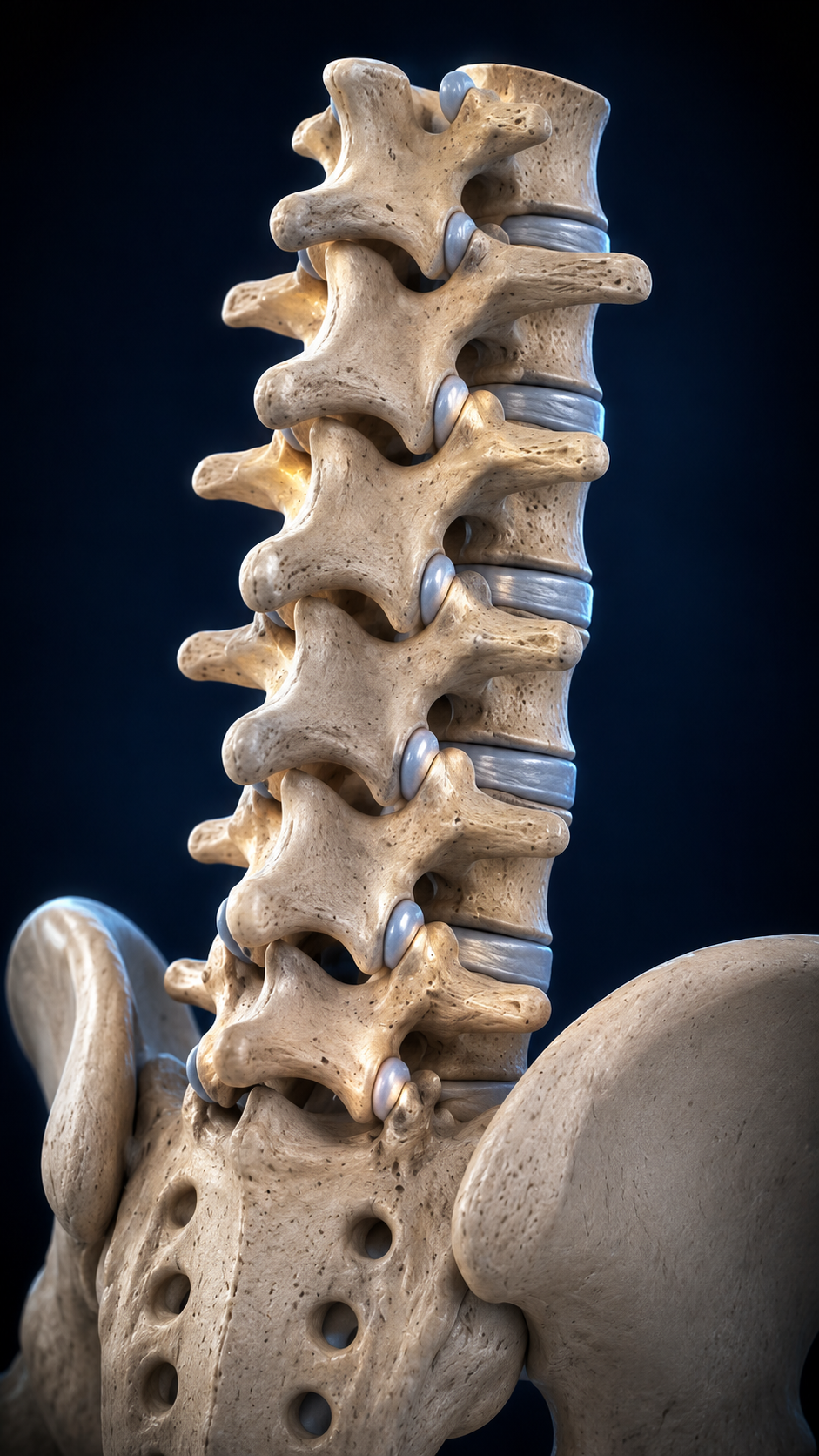
WHAT IT IS
A clear diagnosis to guide your treatment
Discs sit between the vertebrae and help distribute loads. A disc herniation occurs when some of the disc’s contents move out of place and may irritate or compress a nerve root. Some herniations appear on MRI without causing symptoms, so it is essential to relate the imaging to the pattern of pain and the neurological examination.
- Pain that travels from the lower back into the buttock and leg.
- Tingling, numbness or an electric shock-like sensation.
- Pain that may worsen when coughing, sneezing or sitting.
- Weakness when the nerve root is affected.
DIAGNOSIS AND TREATMENT
First, identify the cause
Assessment includes the medical history, testing of strength, sensation and reflexes and, when indicated, imaging such as MRI. Most lumbar disc herniations can be treated without surgery, using measures tailored to each patient.
Surgery is considered when disabling radiating nerve pain persists despite conservative treatment, there is nerve compression that matches the symptoms, or significant neurological deficits develop. The technique, whether endoscopic, minimally invasive or conventional, is chosen according to the location, anatomy and clinical situation.
- Conservative treatment and functional recovery.
- Pain and inflammation management under medical supervision.
- Injections in selected cases.
- Decompression or discectomy when surgery is indicated.
Educational content based on patient information from the American Academy of Orthopaedic Surgeons and the American Association of Neurological Surgeons. It does not replace a medical assessment.
CLÍNICA BOFILL · GIRONA